Photographing a Toxic Ghost Town
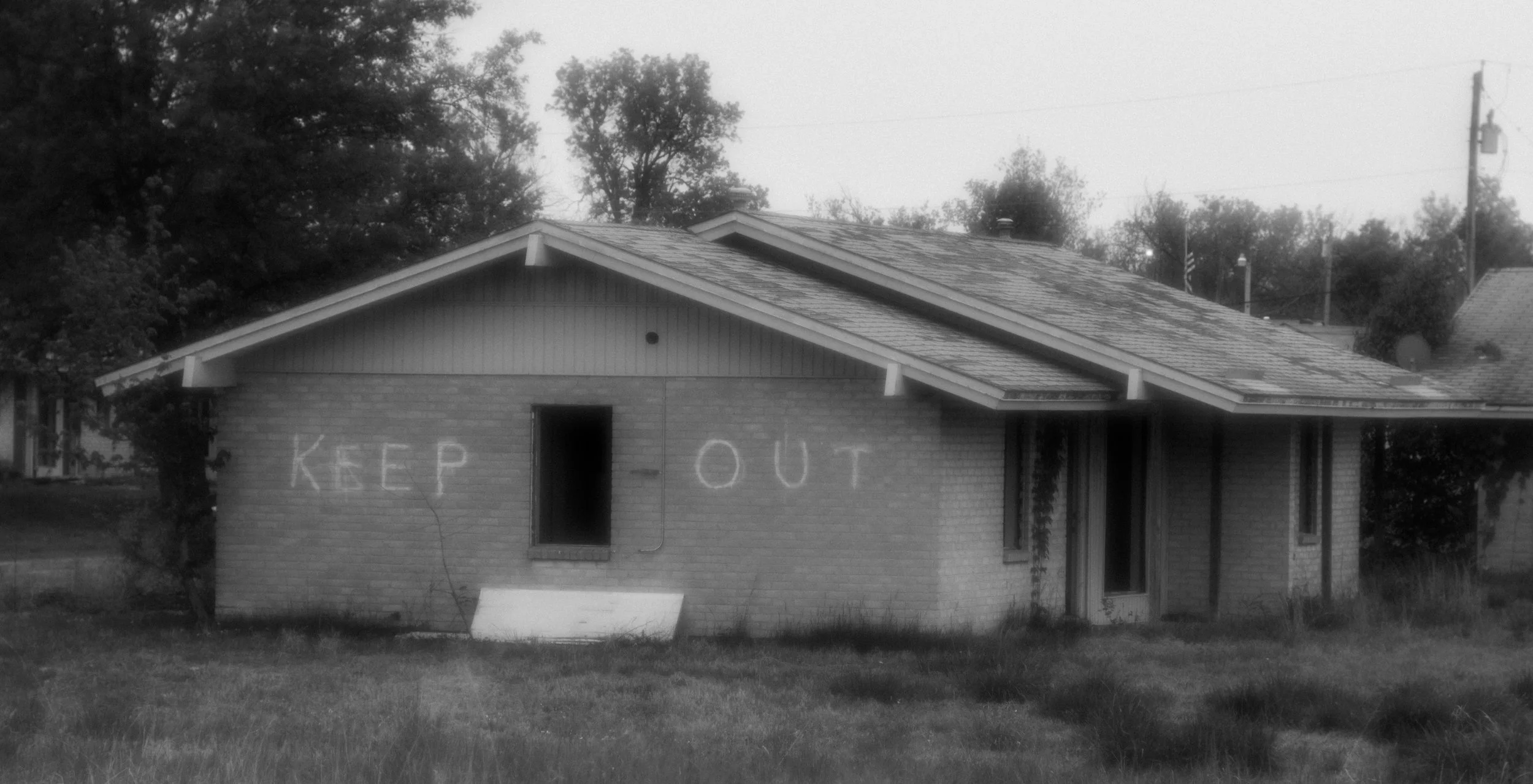
One of the few houses still left behind.
There are abandoned towns—and then there is Picher, Oklahoma.
For many reasons, this town seems to be one of the biggest holder of stories where dreams came to die. And sadly maybe some of the residents as well.
I recently traveled to this former mining community in northeastern Oklahoma to explore and photograph what remains. Picher is often described as a ghost town, but that term almost feels too simple. This is a place shaped by industry, environmental disaster, severe weather and the heartbreaking displacement of an entire community.
It is also one of the most unusual places I have ever photographed.
Mountains Made by Mining
The first things you notice are the enormous chat piles rising above the otherwise flat Oklahoma landscape.
They look like pale mountains dropped into the middle of the prairie. But these are not natural formations. Chat is the crushed rock left behind after miners extracted lead and zinc from the ground.
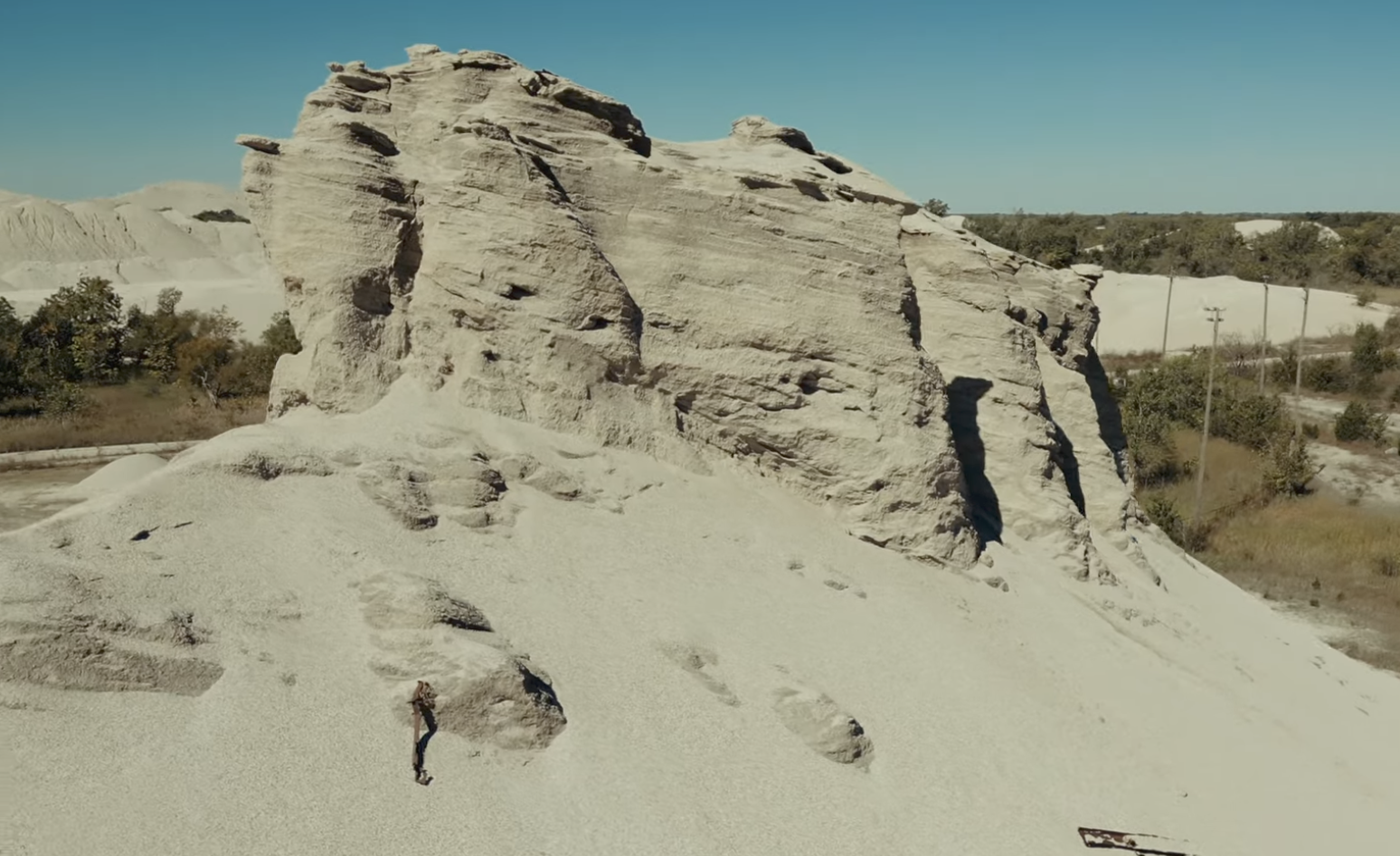
Not really dirt or sand in this pile, it is toxic byproducts of mining tailings.
For decades, Picher sat at the center of one of the most productive lead-and-zinc mining districts in the world. The minerals pulled from beneath the town helped supply American industry and provided materials used during both world wars.
Mining created jobs, businesses and a thriving community. At its peak, Picher was filled with miners, families, schools, stores and busy streets.
But the prosperity came at an enormous cost.
When mining ended, millions of tons of contaminated waste remained behind. Beneath the surface, abandoned tunnels and mine shafts created the danger of sudden cave-ins. Above ground, wind and rain carried lead-contaminated dust into neighborhoods where children played.
The mountains that once represented employment and prosperity eventually became symbols of everything the town had lost.
The Brown Water of Tar Creek
Driving through the area, I came across Tar Creek, the waterway that gave the surrounding Superfund site its name.
The water was a disturbing rusty-brown color. It did not look like an ordinary muddy creek after a rainstorm. Water moving through the abandoned mines picked up iron and other metals before eventually reaching the surface, staining the creek orange and brown.
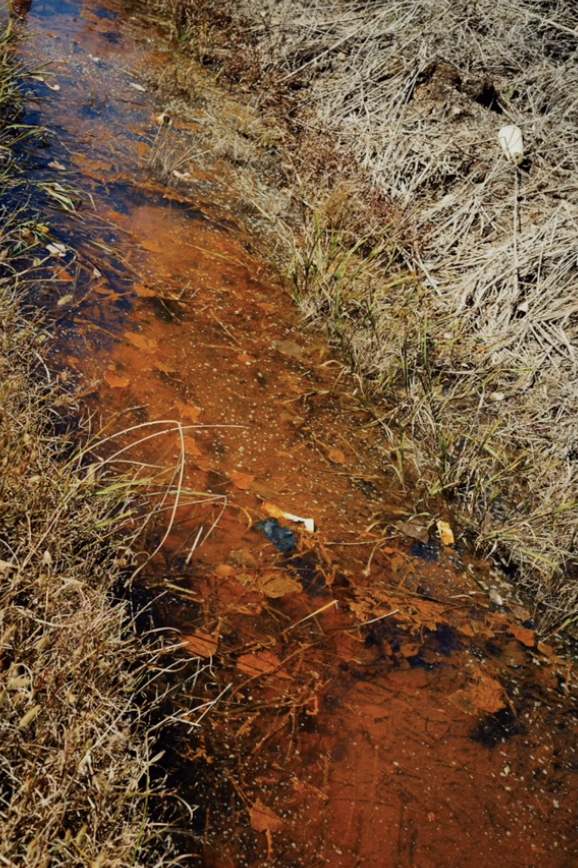
Deep topaz colored water flowing all around Picher and Cardin
Standing beside it, I found myself thinking about the families who lived here while the pollution slowly became part of everyday life.
For residents, this was not simply an environmental story reported on the evening news. It was the creek near their homes, the dust blowing through their neighborhoods and the ground beneath their houses.
Homes Left Behind
Scattered around Picher are abandoned houses and traces of former neighborhoods.
Some buildings lean. Others are slowly disappearing behind weeds and brush. Empty roads lead toward places where homes, businesses and gathering spots once stood.
It is easy to photograph an abandoned house as an interesting object. It is harder when you stop and remember that someone once cooked dinner inside it, celebrated birthdays there and believed it would always be home.
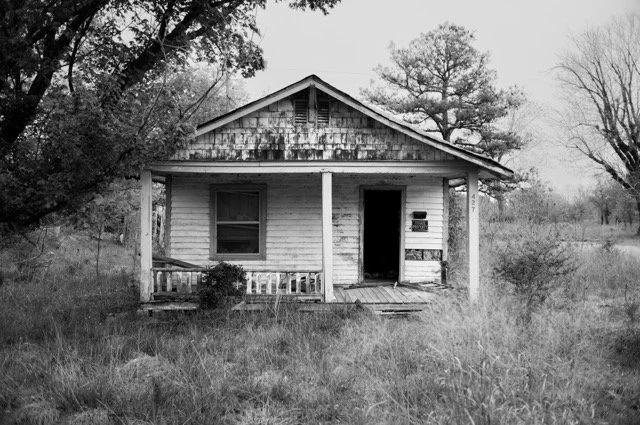
It feels like this home is still waiting for someone to arrive.
Residents were eventually offered buyouts so they could relocate, but leaving was not simple. Some people had spent their entire lives in Picher. Their families had worked in the mines, attended the local schools and built generations of memories there.
One well-known resident, pharmacist Gary Linderman, stayed behind and continued operating the Ole Miners Pharmacy because he did not want to leave while people still depended on him.
Picher was polluted, but it was still their hometown.
The Tornado That Accelerated the End
As if the mining contamination and collapsing ground were not enough, Picher was struck by a powerful EF4 tornado on May 10, 2008.
The storm destroyed or seriously damaged scores of homes and killed six people in Oklahoma. For a town already facing relocation and an uncertain future, the tornado was another devastating blow.
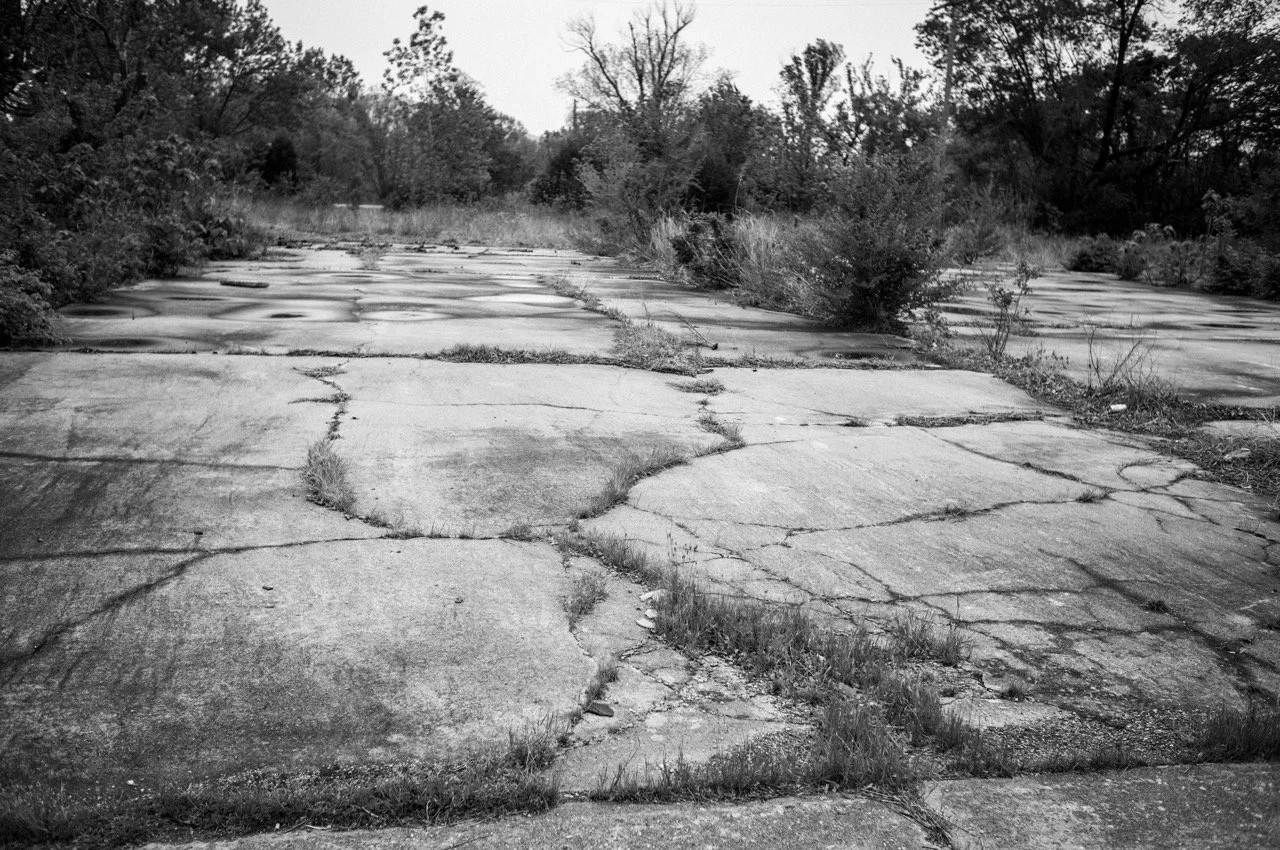
All that is left of many of the homes are the concrete slabs where they once sat.
Some residents wanted to rebuild. Others realized there might no longer be a town to rebuild.
Picher’s final school class graduated in 2009, and the municipal (town) government shut down soon afterward. An active community faded into empty lots, broken foundations and memories carried away by former residents.
The Native American Nation that Reclaimed the Land
The story of Picher did not begin with the mining companies.
Much of this area is part of the land of the Quapaw Nation, whose people suffered along with everyone else from the contamination left behind. Today, the Nation has taken a leading role in cleaning up the Tar Creek area and reclaiming damaged tribal land.
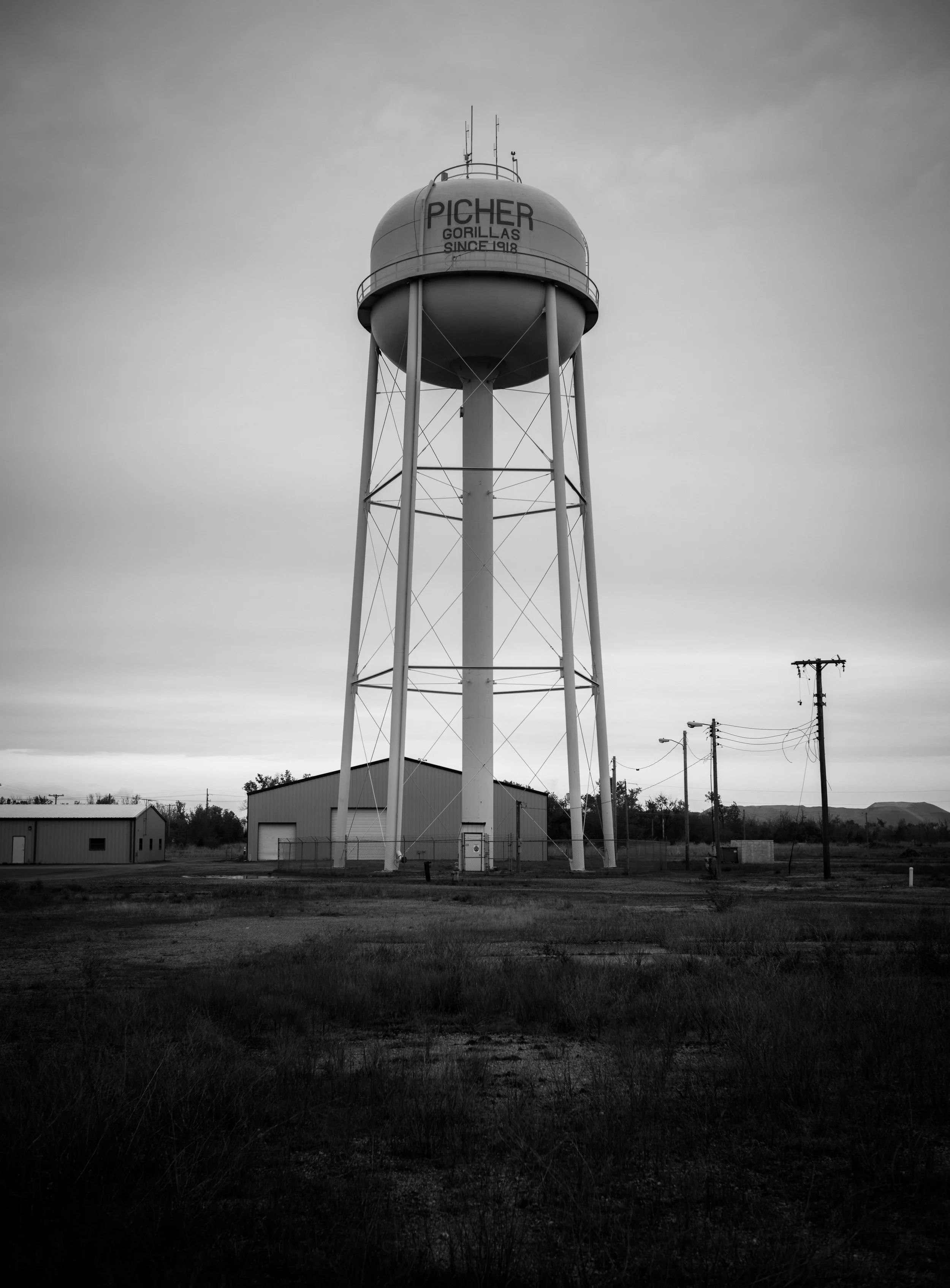
Chat is being removed, contaminated areas are being restored and some cleaned properties are returning to productive uses such as agriculture and grazing.
That work will take many years, but it offers something that Picher’s abandoned buildings cannot: a sense of renewal.
The land may never look exactly as it did before the mines arrived, but the Quapaw Nation is helping determine what its next chapter will become.
Photographing Picher with a Leica M11 Camera
I photographed Picher using my Leica M11, and it felt like the right camera for this particular place.

Timeless photography.
The Leica’s manual rangefinder experience forces me to slow down. There is no rapid-fire approach or complicated automation separating me from the subject. I choose the frame, focus carefully and press the shutter only when the scene feels right.
That simple, almost old-fashioned process matched Picher’s atmosphere.
The faded siding, empty windows, overgrown roads and towering chat piles called for deliberate photographs. With the Leica in my hands, I felt less like I was collecting images and more like I was documenting evidence of a town that once mattered deeply to thousands of people.
More Than an Oklahoma Ghost Town
Picher, Oklahoma, is visually fascinating, but it should never be treated as merely a strange roadside attraction.
It is a story about the promises and consequences of industry. It is about families who built a community, only to discover that the ground beneath them was unstable and the environment around them was contaminated.
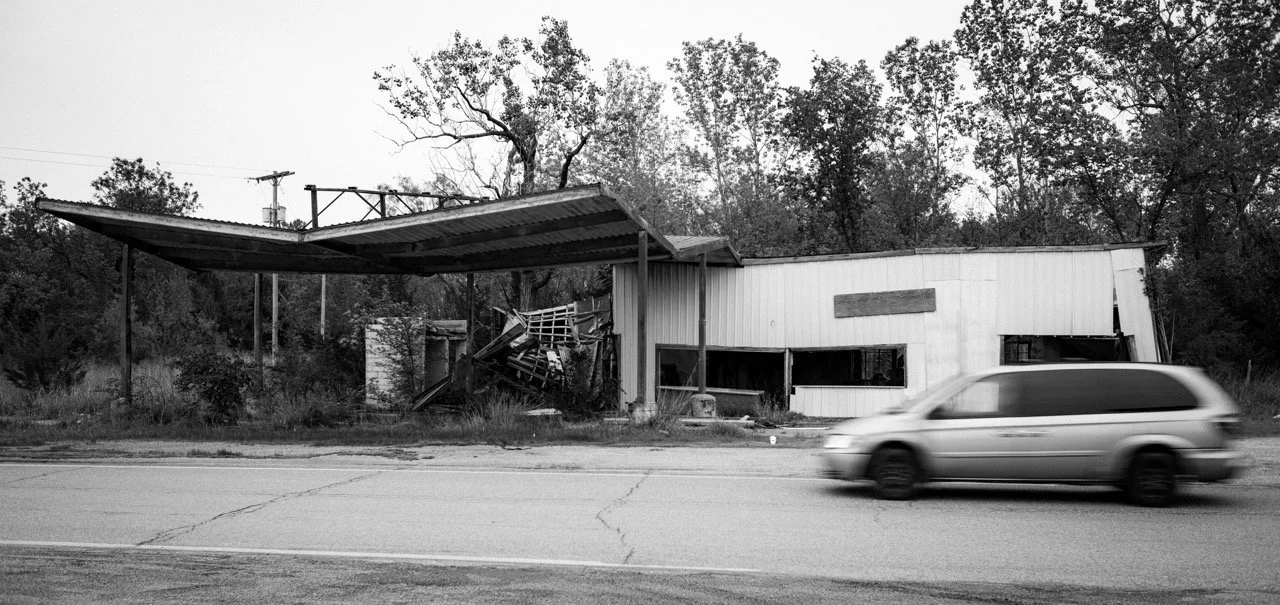
Not much left of the gas station just entering town
It is also a story about survival, memory and the Quapaw Nation’s efforts to restore land that others left damaged.
I came to Picher looking for photographs. I left thinking about the people who once called it home—and about how quickly a booming American town can become part of history.
Before you go, check out my video I did on Picher by clicking here.
Stay safe and healthy. And never take your environment too lightly.