Why I Shoot Black and White Film
Am I just backwards? Is it just nostalgia? Why would I want to use an imaging medium that costs more money?
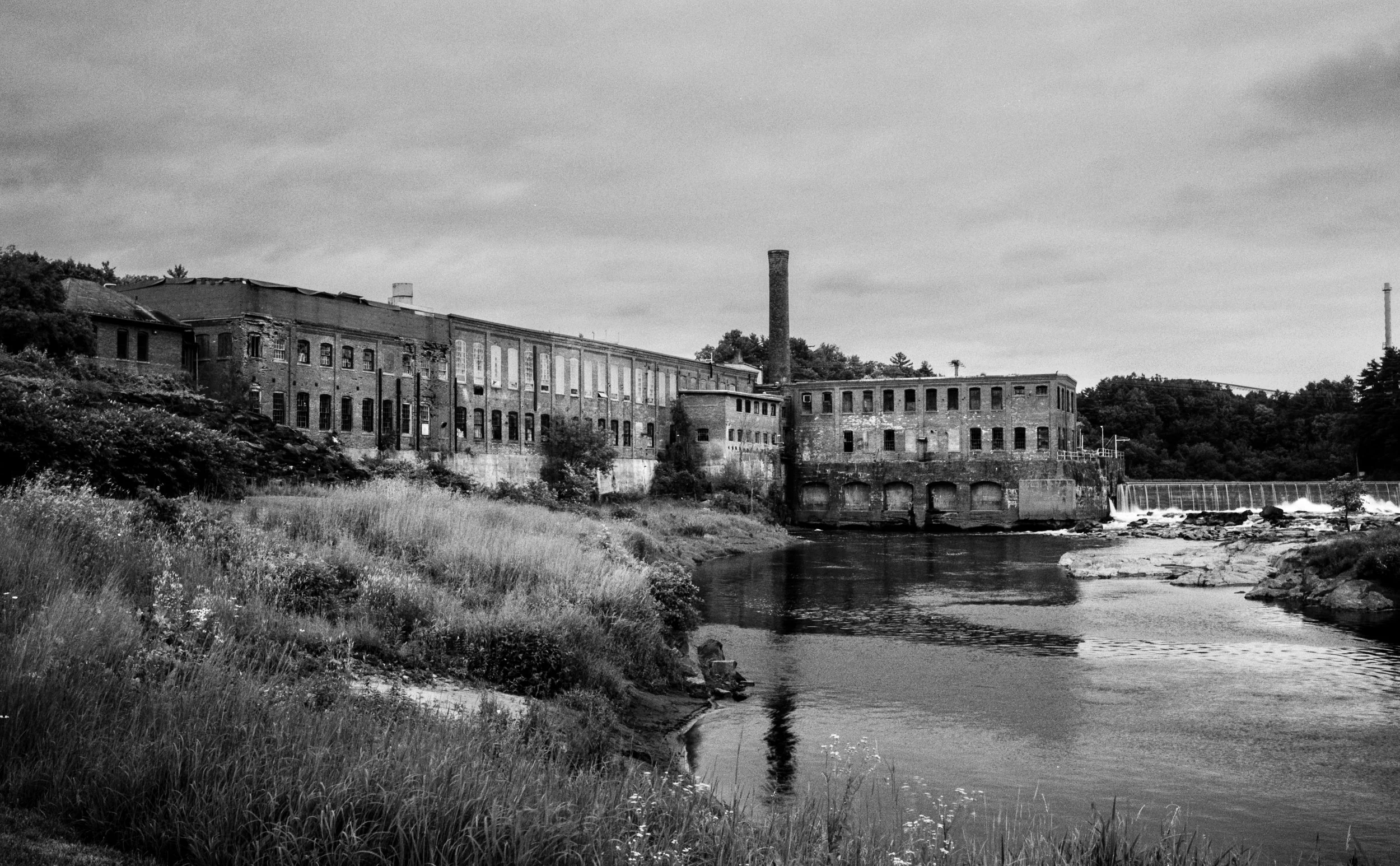
East Ryegate Papermill - Ilford Pan F Film (Gary Buzel 2026)
I spent an afternoon last year inside the closed paper mill in East Ryegate, Vermont, shooting Ilford Pan F on a Leica MP while the owner walked me through what was left of it. Collapsed roof sections, a dam running outside, a Rolls Royce parked in a building that used to make paper. Every frame I took that day was black and white, and not one of them would have been better in color. Ok, I am a little biased!
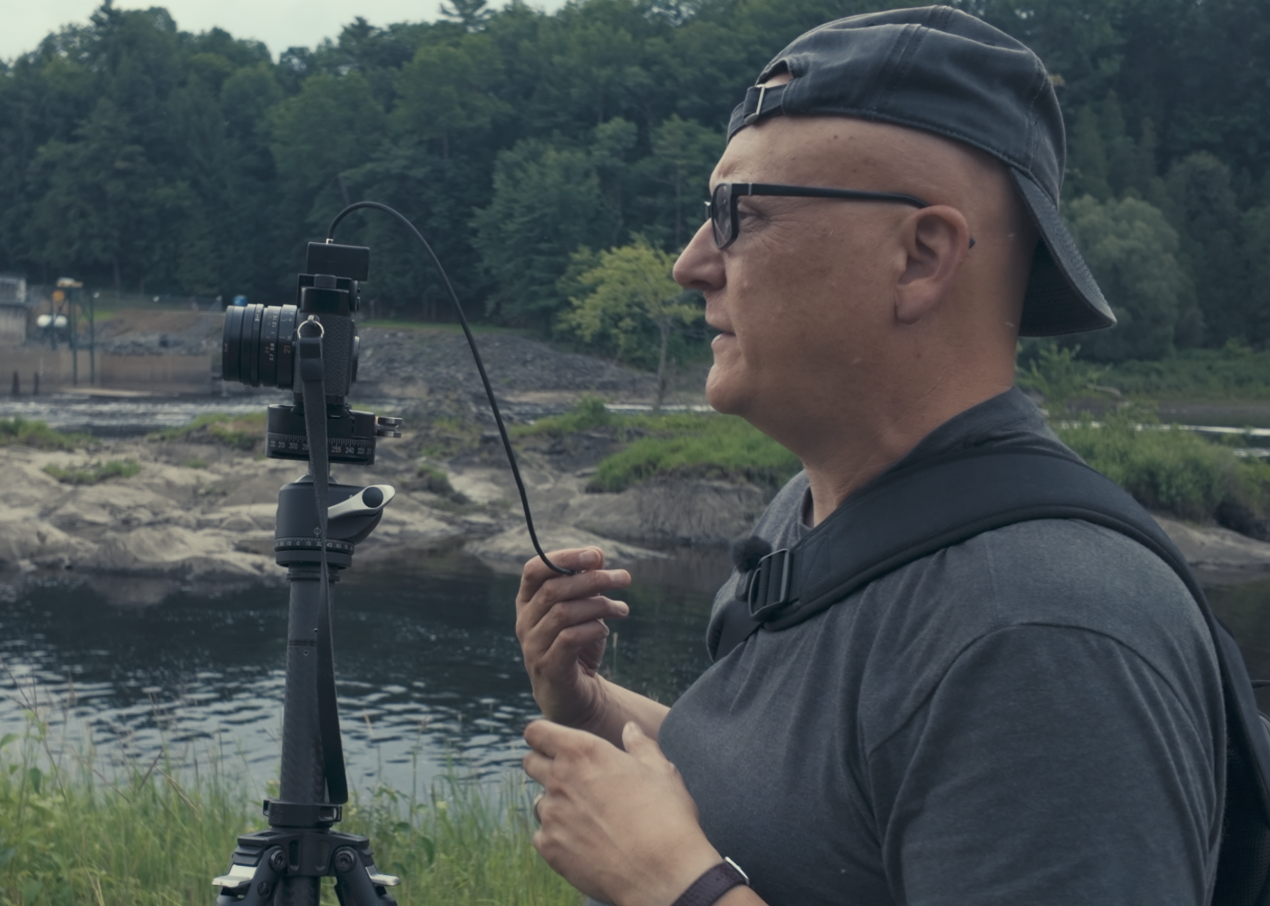
Pan f loaded in my Leica MP (Gary Buzel 2026)
Click here to see YouTube video of this photoshoot and learn the history from the owner.
That's the part people get wrong about this choice. Black and white isn't a filter you apply to a photograph. It's a decision about what the photograph is going to be about, and you make it before you ever raise the camera.
Color is information, and it's usually the wrong information.
Walk into almost any scene and color is the loudest thing in it. A red jacket in the background will pull a viewer's eye off the face you built the frame around. A green exit sign will fight your subject for attention and frequently win. Color is not neutral — it's a competing narrative running underneath yours. Strip it out and what's left is structure: light, shadow, shape, gesture, the geometry of how things sit in relation to each other. Think of it like leveling the playing field in an image. Those are the things that actually carry meaning in a still frame. Black and white doesn't simplify a photograph. It clears the room so you can see whether the photograph was ever any good.
Film does something a digital conversion doesn't.
I shoot digital too — my Leica M11 and the Nikon Z8 both earn their keep, and I'd never pretend otherwise. But a black and white conversion in post is a subtraction performed on a color file, and it tends to look like one. Film is monochrome from the emulsion up.
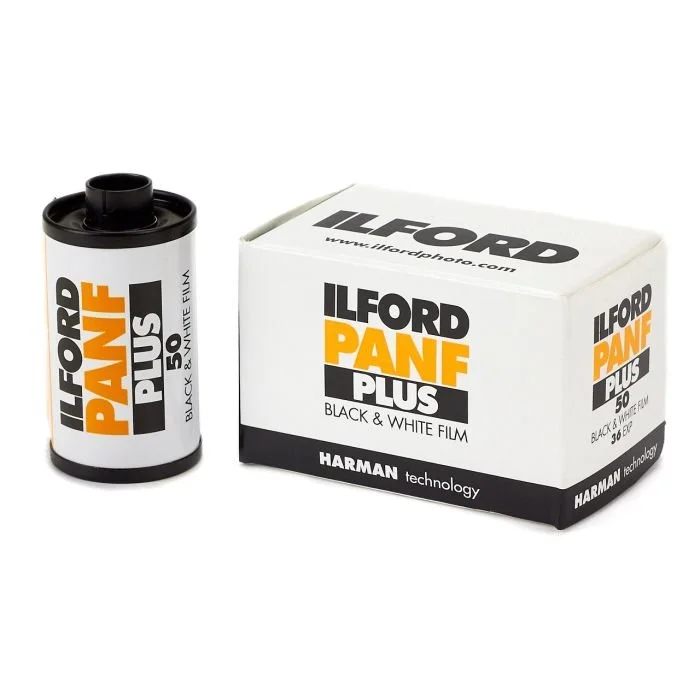
Ilford Pan F film (Harman Technology 2025)
Pan F at ISO 50 has almost no grain and a tonal response that holds detail in a highlight right up until it doesn't. Tri-X pushed to 1600 in bad light gives you grain that reads as texture rather than noise — it looks like the condition it was shot in. Each stock has a personality it imposes on the scene, and you choose the stock before you leave the house. That's a commitment, and commitment tends to produce better work than infinite optionality does. Ok, you get it… Film give it personality!
The constraints are the point, not the cost of admission.
Thirty-six frames. One ISO for the whole roll. No histogram, no chimping, no second look. On my 6×9 negative format Fuji GW690 II it's worse — eight frames on a roll of 120, and a viewfinder with nothing in it but a bright line and a rangefinder patch. You cannot shoot your way to a good photograph under those conditions. You have to arrive at one. Everything shifts earlier in the process: watching the light, reading the scene, waiting instead of spraying. I'm a better photographer with a digital body in my hands because of the habits film enforced, and I don't think that's a coincidence. Scarcity makes you decide. Deciding is the whole job.
My long-term work — the Lens Forgotten project — sits downstream of the New Topographics photographers. Robert Adams, Lewis Baltz, Henry Wessel, the Bechers. They photographed the built landscape without editorializing about it, and they mostly did it in black and white, because black and white refuses to be pretty on the scene's behalf. A rusted mill in color can slide toward ruin porn — all that beautiful oxidized orange. In black and white it's just a building that stopped working, described accurately. That's what I'm after. Monochrome reads as document rather than decoration, and when your subject is a place that got left behind, that distinction matters.
And then there's the negative.
I've lost files. Everyone who has worked digitally for twenty years has lost files — a drive that died, a format nobody reads anymore, a backup that turned out not to be one. A properly processed negative in a sleeve is still a negative in fifty years, readable by anyone who holds it up to a window. For work meant to outlast the news cycle that produced it, that permanence isn't sentimental. It's archival strategy.
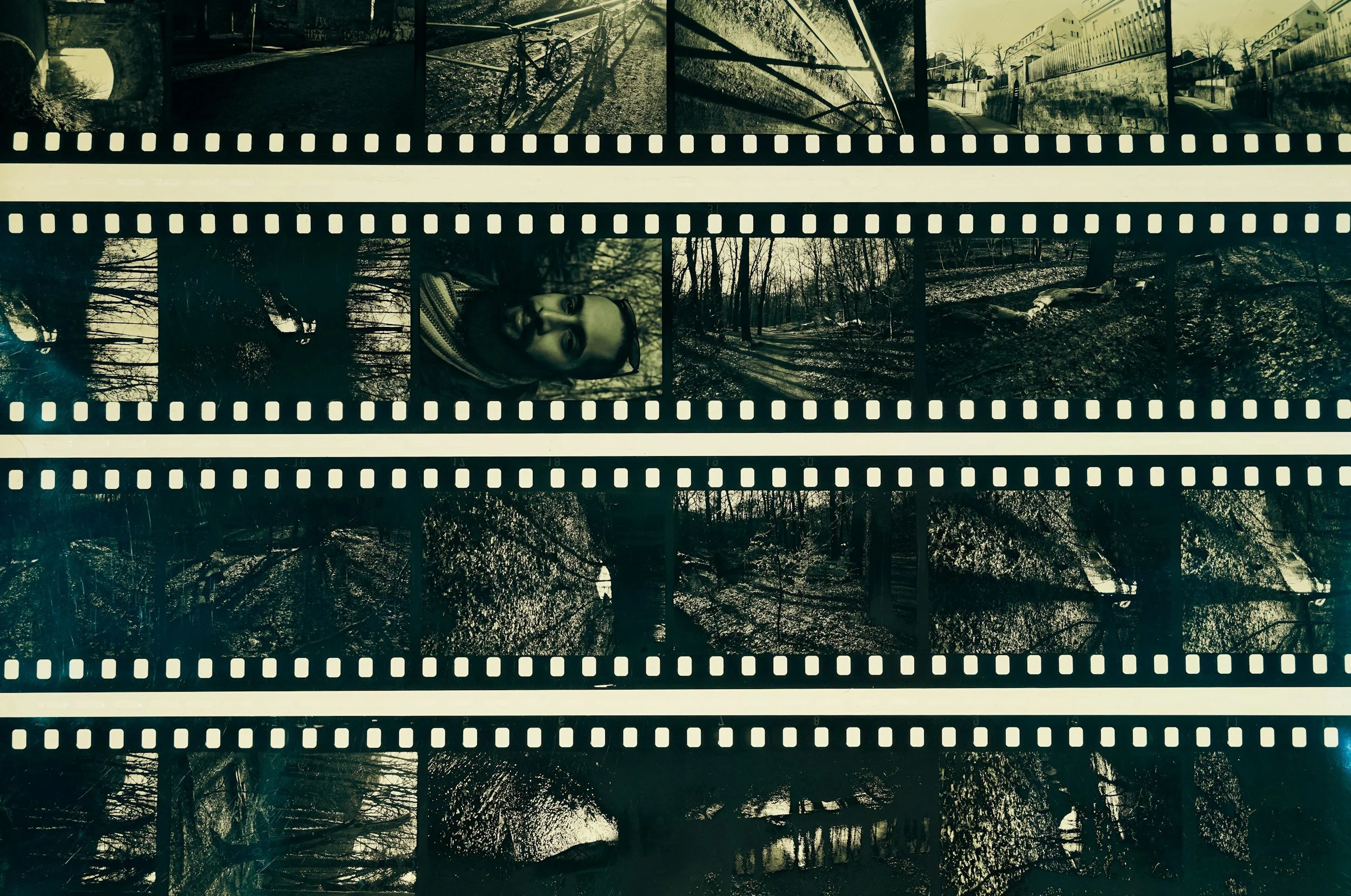
Is it really a negative? or maybe a NET POSITIVE!
None of this is nostalgia. I'm not romantic about film, and I'm not interested in the argument that it's more authentic — authenticity comes from the photographer, not the medium. Film is a tool with a specific set of properties, and those properties happen to be well matched to certain kinds of work. It slows the decision down, removes the information I don't want, imposes a look I can't fake in Lightroom, and leaves behind an object.
It’s hard to believe I still have memories from 1999 when I began to embrace digital photography, thinking I was done with film, chemicals and all the hassle forever. Surprise 2026 is calling your retro self to come back. This time it’s not just nostalgia.
The mill in East Ryegate is going to keep falling down whether I photograph it or not. But the negatives from that afternoon will be sitting in a binder long after the drive holding this blog post has failed. That's a reasonable argument for loading a roll.
I still shoot digital and have digital cameras I still use every day. Just for now, let me enjoy my love affair with film…